Project information
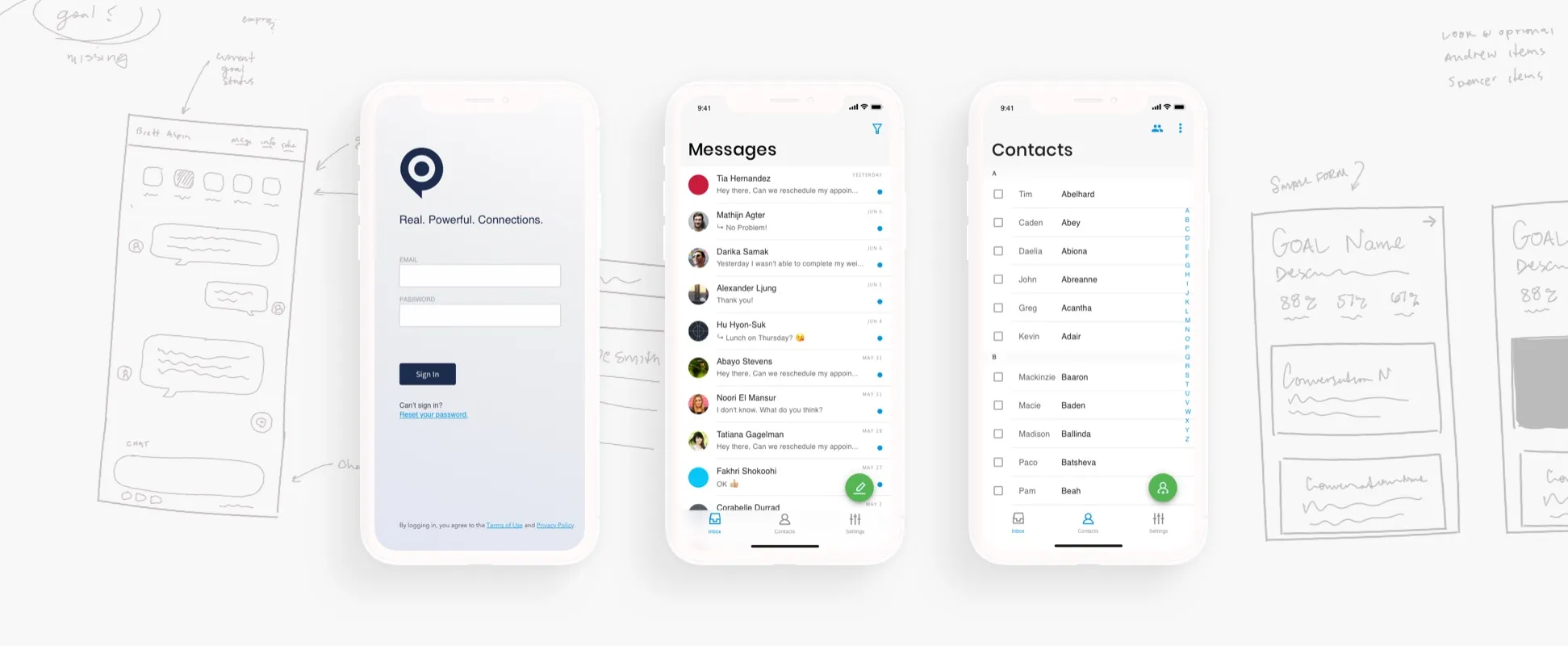
Skipio is a small business SaaS application that allows businesses to use SMS texting as a communication tool in an automated and conversational way. As Director of UX I was tasked with defining the UX vision of the product for both web and mobile applications, developing a consistent and aesthetically pleasing design system, and building a team of product designers and product owners to reach out and talk to people about their experiences with Skipio.
For this project, it was decided that we could leverage our existing front-end development talent and create a React Native app instead of using overseas developers to build separate native applications.
Timeline
As a team we were given approximately 1 month to design a solution and 1 month to put it into production.
Project goals
- Remove inconsistencies between platforms and update the interface to include common mobile interaction patterns.
- Develop a React Native app to replace the Swift and Kotlin apps that were deployed.
- Create an experience where messaging in Skipio felt as comfortable as messaging in iOS Messages or Android Messages.
- Begin to introduce automation and campaign functionality to the mobile messaging app.
Heuristic analysis
Prior to beginning the redesign, I felt it was important to understand the strengths and deficiencies of the app. Given the time frame I had to work with, I felt a heuristic review — while subjective — was the quickest way to gain insight on the usability of the app. I referenced Nielsen Norman Group’s article on Ten Usability Heuristics.
While the app scored high in several areas, there was definite improvement needed in areas of Efficiency of Use, User Control and Freedom, Consistency and Standards, and Recognition vs. Recall.
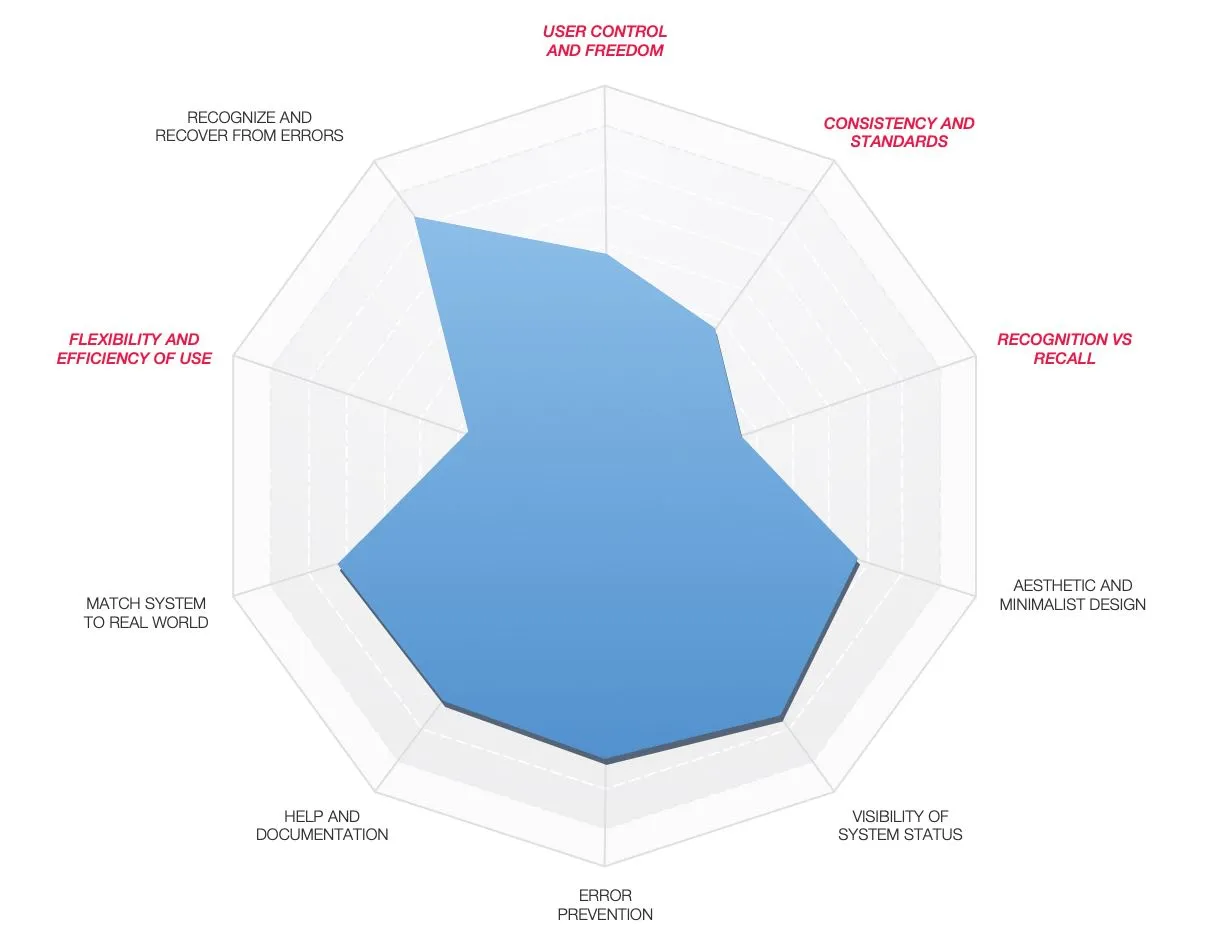
Heuristic review of the existing app against Nielsen Norman Group’s ten usability heuristics.
Wireframing and prototyping
Initial concept wireframes for adding event management and calendaring into the mobile app.
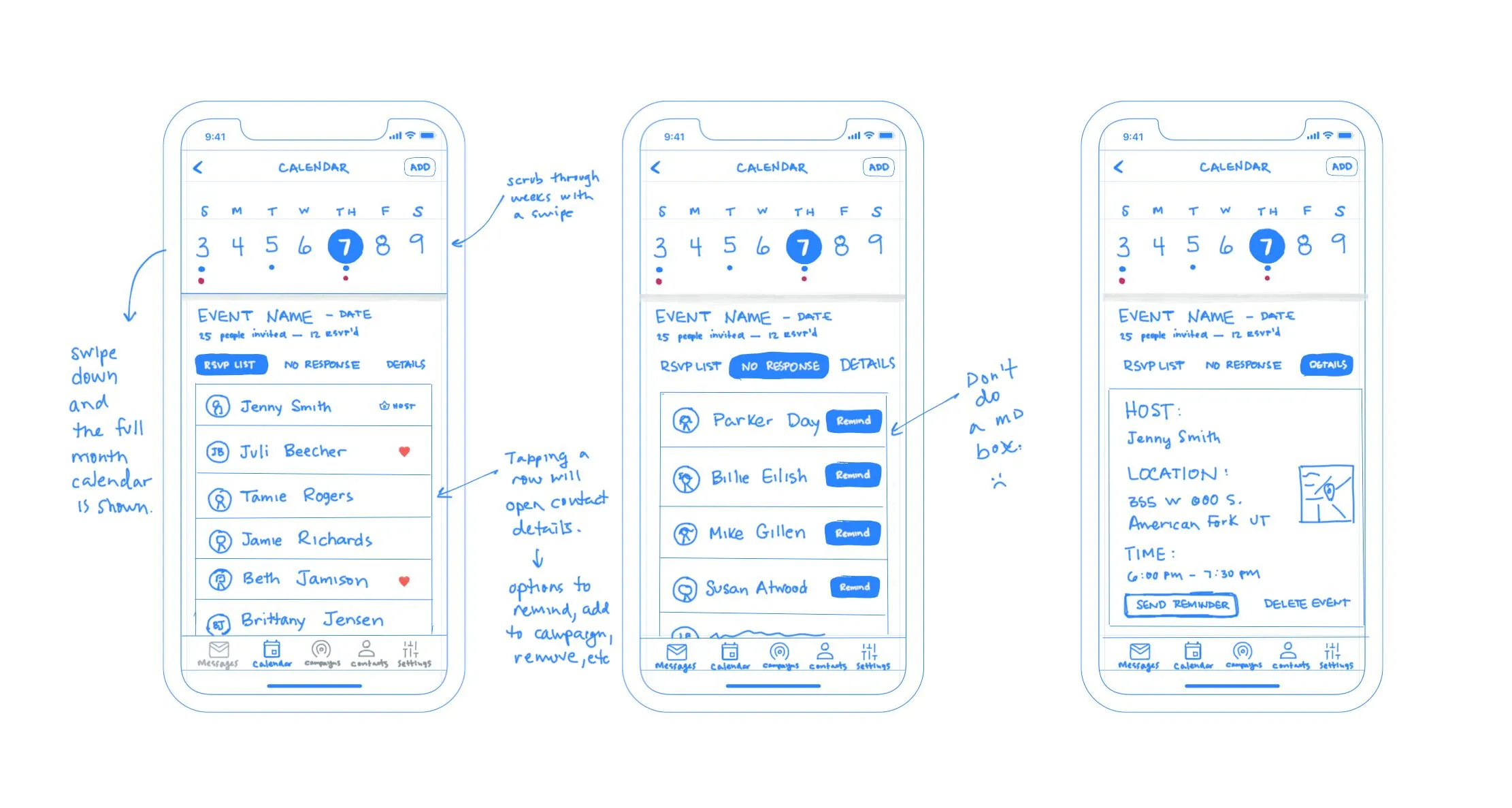
Initial concept wireframes for adding event management and calendaring into the mobile app.
Hi-fidelity flows were hung on our “Experience Wall” to give others in the organization a chance to provide feedback.
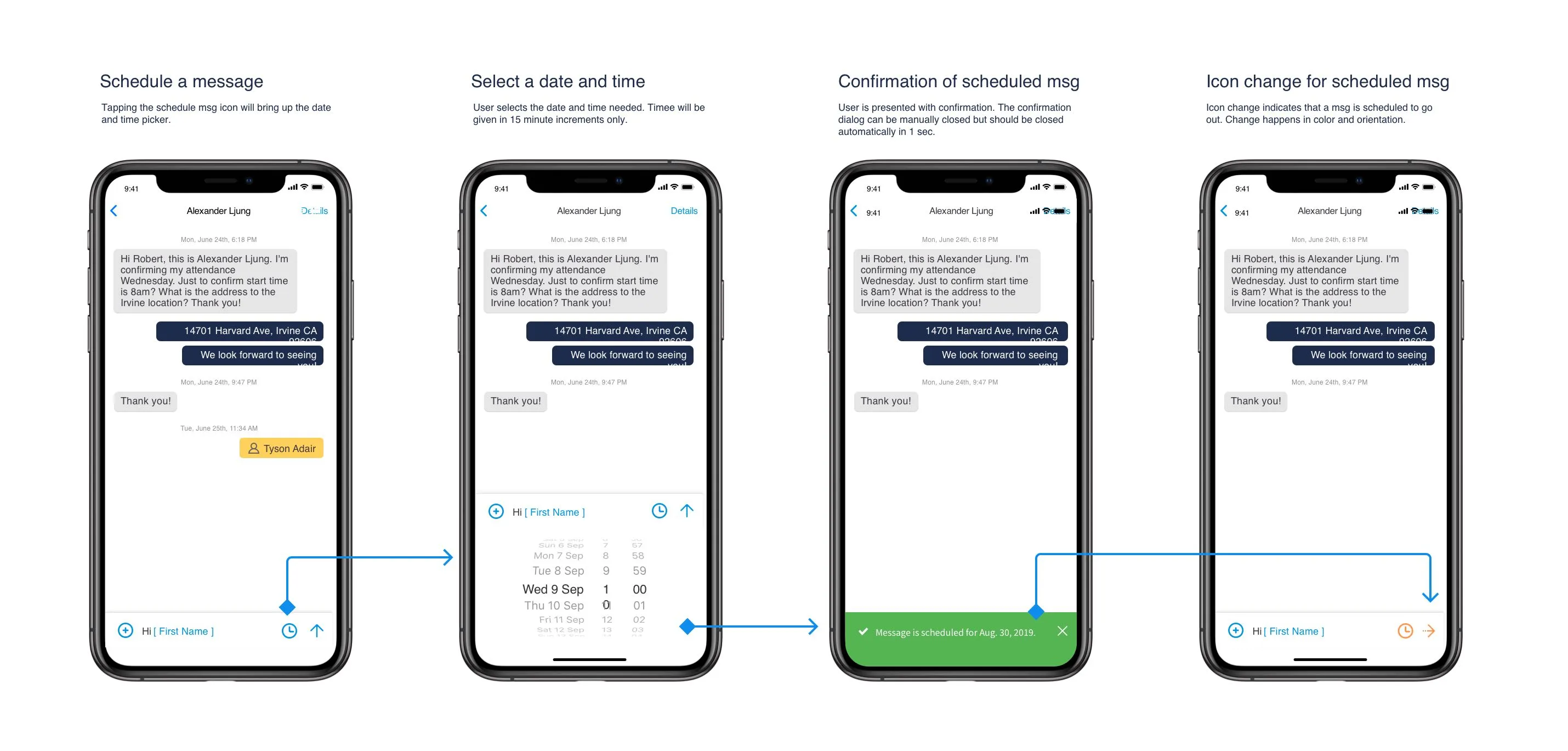
Hi-fidelity flows hung on our “Experience Wall” so the rest of the organization could give feedback.
Extensive prototyping was done in Sketch and InVision. This work is available to be shown on request, to protect the intellectual property of Skipio and comply with requests to keep this sensitive information from being widely distributed.
Outcomes
Change is hard. Several things went well and a few items could have been better.
What could have been better
- Roll-out communication. Every attempt to port features over from the native app to the React Native version was made. Even though those features were ported over, the change caused confusion and distrust in Skipio as a company. The overall rollout was rushed and not thought through, and various departments in the organization were not given enough information on the new app.
- Assumptions about the team’s readiness. We assumed that because our engineering team knew JavaScript, it would be enough to create a React Native app. Our engineers were talented but unproven in React Native, and so when the deployment happened a lot of bugs were introduced that impacted the day-to-day business of our customers. More time should have been spent on a beta version of the app to help with the change over.
- Mistaking motion for progress. Designing and developing this app in such a short timeframe was a great example of mistaking motion for action. I failed as a designer in helping the business see more time was needed to put the app in front of the customer and let them validate our assumptions.
What went right
- We removed a lot of the weird interaction patterns and inconsistencies within the app that were found in the iOS and Android versions. These improvements laid a foundation that is stronger and easier to build on.
- The app updates paved the way for additional functionality to be introduced that we could not do in the past. As of my leaving Skipio, plans were in the works to add campaign-type functionality to the mobile app.
- As a team we came together and learned how to design, develop and deploy a React Native app over an existing app.
Conclusion
The mobile app was released in October of 2019. Shortly thereafter I was included in a round of layoffs. Unfortunately, I am unable to look at the Amplitude data to see if the changes made were advancing the goals we had made as a team. As a manager on this project and as an individual contributor, I am pleased with the results of the project. There were many more things I would have liked to accomplish, but I will have to rely on the team left at Skipio to make that happen.